|
Family Links
|
|
Spouses/Children:
1. Living
|
|
|
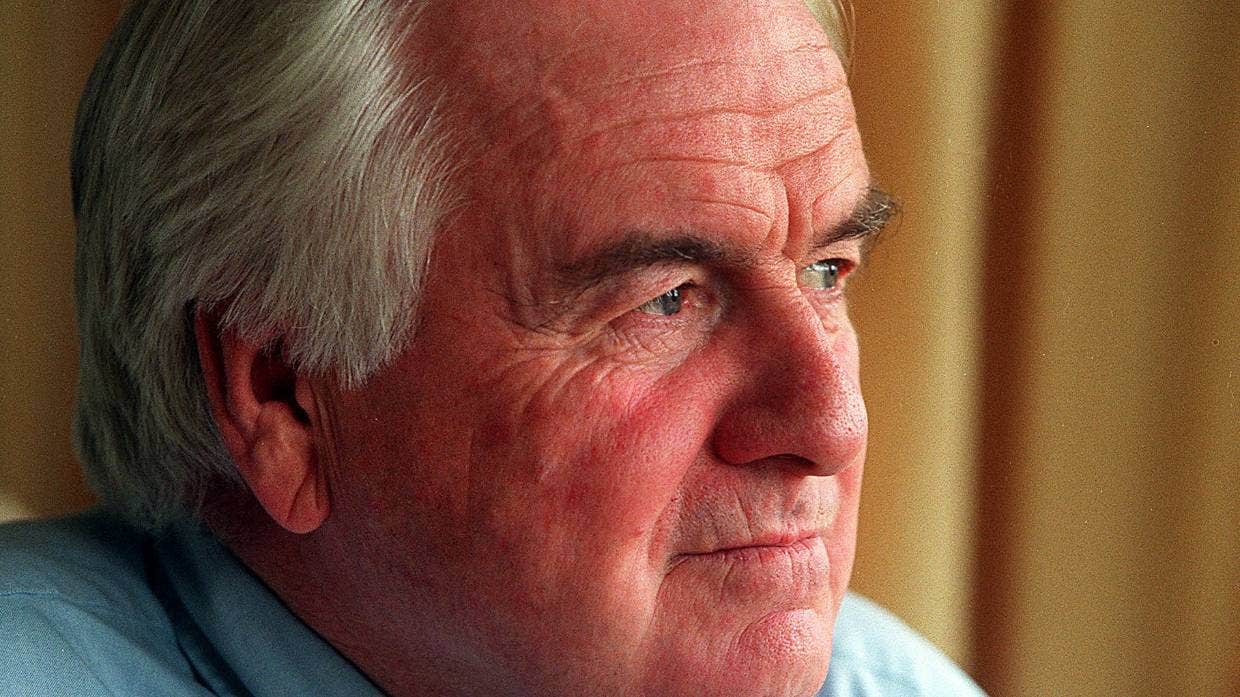
Terence Christopher O'BRIEN [4318]
- Born: 6 Jan 1936, Aylesbury BKM
- Died: 30 Dec 1922, Wellington NZ aged -13
- Buried: Private Funeral WTN

 General Notes: General Notes:
Terence O'Brien (New Zealand diplomat)
Born Terence Christopher O'Brien 6 January 1936 (age 82) Aylesbury , England , United Kingdom
Nationality New Zealander
Profession Former diplomat
Terence Christopher O'Brien is a former New Zealand diplomat who led New Zealand in 1993 to a seat on the United Nations Security Council .
O'Brien was born in Aylesbury in the United Kingdom. His father was a pilot in the Royal Air Force (RAF) who was sent to New Zealand during the Second World War . In 1940, he moved with his mother and sister to New Zealand by boat, narrowly avoiding being torpedoed by German u-boats, to follow his father who had taken up a post as Chief Air Instructor to the Royal New Zealand Air Force (RNZAF) during the Second World War . Shortly after the end of the war, O'Brien returned to the United Kingdom to be educated at Beaumont College , and later University College Oxford where he read history. Following graduation O'Brien returned to New Zealand with which he had developed a great affinity in his early years and joined the then Department of External Affairs (subsequently the Ministry of Foreign Affairs and Trade ) in 1959.
O'Brien served as a diplomat with the New Zealand Ministry of Foreign Affairs and Trade for over 40 years from 1959 - 2001. He held early postings in the 1960s in Bangkok, London, and Brussels. It was in Brussels that as a first secretary he helped New Zealand to negotiate a special deal with the European Community giving access for New Zealand dairy products to Europe when the United Kingdom joined the Community in 1972. O'Brien then served as High Commissioner to the Cook Islands (1975-77), and then as Ambassador to the United Nations in Geneva (1980-83), to the European Community in Brussels (1983-86) and finally to the United Nations in New York (1990-93) where he was instrumental in helping New Zealand to secure a seat on the UN Security Council. He was President of the United Nations Security Council during the war in Yugoslavia. While in New York, his leadership was a critical factor in New Zealand's securing a seat on the United Nations Security Council, despite competition from more favoured countries such as Spain and Sweden . Nicknamed by the New Zealand press on several occasions "Chardonnay O'Brien" for his love of a good glass of wine and a good cocktail party, O'Brien is known for his global view and his articulation of the role of New Zealand as an independent and free thinking country with its own values and way of doing things. O'Brien has always believed that small countries like New Zealand need to use and support international institutions such as the United Nations to promote common and universal values and have influence in international affairs.
In 1993 O'Brien was appointed Founding Director of the New Zealand Centre for Strategic Studies He served as Director for almost 8 years until his retirement in 2001, earning the new institution a respected reputation and high public profile. Controversy surrounded his replacement in 2002 by David Dickens , a former Ministry of Defence official. The Parliamentary Select Committee on Foreign Affairs, Defence and Trade investigated the matter and issued a critical report.
In 2009, O'Brien published a book entitled 'Presence of Mind: New Zealand in the World'. The book New Zealand in the World is a selection of writings on the place of New Zealand in the world reflecting on the position of a small country such as New Zealand and its place on the international stage from the perspective of a small, internationally minded, modern and multicultural democracy. The book stresses the importance of New Zealand taking an independent view on international affairs, reflecting its heritage as a nation located in the south-west Pacific with both Maori and European roots.
O'Brien continues as an Advisor to the Centre for Strategic Studies and a regular contributor to the New Zealand media on foreign policy issues. During 2012 he wrote several articles arguing against proposed reforms in the New Zealand Ministry of Foreign Affairs and Trade . His argument was that becoming a diplomat requires a special type of skill and that treating the Ministry of Foreign Affairs with a purely business approach was short-sighted and not to the long-term benefit of New Zealand.
From Wikipedia.
OBITUARY
Terence Christopher O'Brien: diplomat; b January 6, 1936; d December 30, 2022
Former top diplomat Terence Christopher O'Brien?, who has died in Wellington, aged 86, is remembered as a free thinker who perfected the art of diplomacy and high-stakes negotiations.
Though born in England to Irish parents, for more than 40 years he faithfully served New Zealand as a diplomat with postings in key cities such as London, Brussels, Geneva and New York.
He is credited as a "giant of New Zealand foreign policy" and fierce proponent of Aotearoa's free, independent foreign policy contributing to the country's prosperity today.
Helen Clark?, former New Zealand prime minister and former administrator of the United Nations Development Programme, described O'Brien as a "staunch advocate of New Zealand's independent foreign policy".
"He was always prepared to offer free and frank advice, and was well respected for his integrity and expertise," she says.
Former head of Foreign Affairs Merwyn (Merv) Norrish? once spoke of "the debt that thinking New Zealanders owe to Terence O'Brien".
He was referring to the frequent contributions which, in retirement and in writing and commentary, O'Brien made to public knowledge and understanding of New Zealand's place in the world, and issues that mattered to the country.
Much like Norrish, O'Brien was an eyewitness to some of the most important events in postwar New Zealand and global history.
O'Brien was born to Oliver James (Paddy) O'Brien?, former New Zealand Chief Inspector of Air Accidents, and Margaret (Peggy) O'Brien?, an accomplished concert pianist, in Aylesbury, Buckinghamshire, in 1936.
His family moved to New Zealand in 1940 and his father trained Royal New Zealand Air Force pilots in World War II. O'Brien briefly returned to Britain to continue his studies, which included time at University College, Oxford, before settling back in New Zealand.
After joining what was then called the Department of External Affairs, his early overseas postings were to Bangkok, London and Brussels in the 1960s and 1970s.
In Brussels, O'Brien was part of the team that helped negotiate a deal with the European Community giving access for New Zealand dairy products to Europe when the United Kingdom joined the European Economic Community in the early 1970s.
That period made clear both the opportunities and the limitations of small-country diplomacy.
O'Brien was a strong believer in New Zealand carving out its own foreign policy separate from dominant powers such as the United States. That was evident in Aotearoa's nuclear-free policy positioning which was not universally supported in officialdom
He was unafraid to push New Zealand to think for itself, and to use every opportunity to deploy effectively its 'soft power' credentials as a small, modern, internationally minded and multicultural democracy.
In the mid-to-late 1970s he served as New Zealand's first accredited representative to the Cook Islands.
From there he went on to become New Zealand's ambassador to the United Nations in Geneva (1980-83), to the European Community in Brussels (1983-86) and finally to the United Nations in New York (1990-93).
He is thought to be the only foreign service officer to have headed all three offices .
O'Brien is perhaps best credited with leading the successful campaign for New Zealand to be elected as a non-permanent member of the United Nations Security Council \endash one of only four terms the country served, including most recently in 2015.
He once claimed the campaign had involved at least 400 one-on-one lobbying encounters.
O'Brien briefly presided over the council in 1993, an especially busy time as it met frequently to address various trouble spots in Europe and elsewhere.
A personal highlight was a Security Council mission that visited war-torn Bosnia in April 1993, an experience he described as "harrowing".
Returning to New Zealand later that year, he went on to become the inaugural director of the Centre for Strategic Studies at Victoria University of Wellington. To celebrate his 80th birthday, his family also established a scholarship at Te Herenga Waka-Victoria University of Wellington.
He taught at graduate level and launched his ''second career'' as a much-sought-after, perceptive observer of regional and global events.
Chris Seed, MFAT's Secretary of Foreign Affairs and Trade, says that O'Brien continued making an "out-sized contribution to the national discourse on our foreign and strategic policy".
He described O'Brien as a gentleman who left an "extraordinary legacy" and whose counsel would be greatly missed.
O'Brien's long diplomatic career made for a colourful and varied childhood for his four children, John, Georgia, Daniel and Timothy.
John recalled meeting then prime minister Robert Muldoon? when he came to visit in the Cook Islands and playing croquet with then prime minister David Lange? in Belgium.
His father was a very principled person who was true to himself.
At age 11, when John wanted to photocopy something using the machine at the New Zealand Embassy in Geneva, his father told him the taxpayer shouldn't have to pay for it.
"He made me pay 20 cents to the petty cash officer to pay for my photocopy."
His father had a great affinity for New Zealand and did not like it when someone, including his own sister, called him a Pom.
When asked by family why he didn't have a British passport, O'Brien replied: "Why would I need one, because I'm a Kiwi?"
It was this passion which drove his work, though there was a degree of sacrifice involved in O'Brien's role.
He was often not able to spend much time with his family, sometimes forgoing family holidays as he had to work.
"He was very dedicated to New Zealand. He was passionate about it having its own place in the world," says John, something which made him immensely proud of his dad.
His wife Elizabeth? says sharing a life with someone in such a prominent diplomatic role had its ups and downs.
"Living in different countries and getting to know different cultures was very rewarding, as were experiences that went hand in hand with that life. On the other hand, the endless cocktail and dinner parties were hard to endure."
She credited their 60 years together to their shared values and the example set by their parents.
Outside work, O'Brien was described as a voracious reader, and a sports enthusiast who enjoyed rugby, cricket and other sports.
Dan says his father was also a francophile and "bon vivant" who enjoyed some of the finer things in life \endash food and wine.
"[He] was a raconteur, he loved to be around people, regale them with stories."
He had "elephant-like memories for people and places" and a good understanding of what made people who they were.
Daughter Georgia agreed her father had a true joie de vivre who enjoyed his work and travelling the world experiencing different cultures.
"He enjoyed talking to people, listening to them, always trying to keep his mind open."
He also deeply loved his family, she says. He was always interested in what his children and grandchildren were doing, and what their opinions on world affairs were.
Sources: Brian Lynch, James Kember, Bruce Kohn, Ministry of Foreign Affairs and Trade, O'Brien family and Stuff archives.
Gianina Schwanecke
Jan 06 2023
Terence married Living
|